
Quick Summary
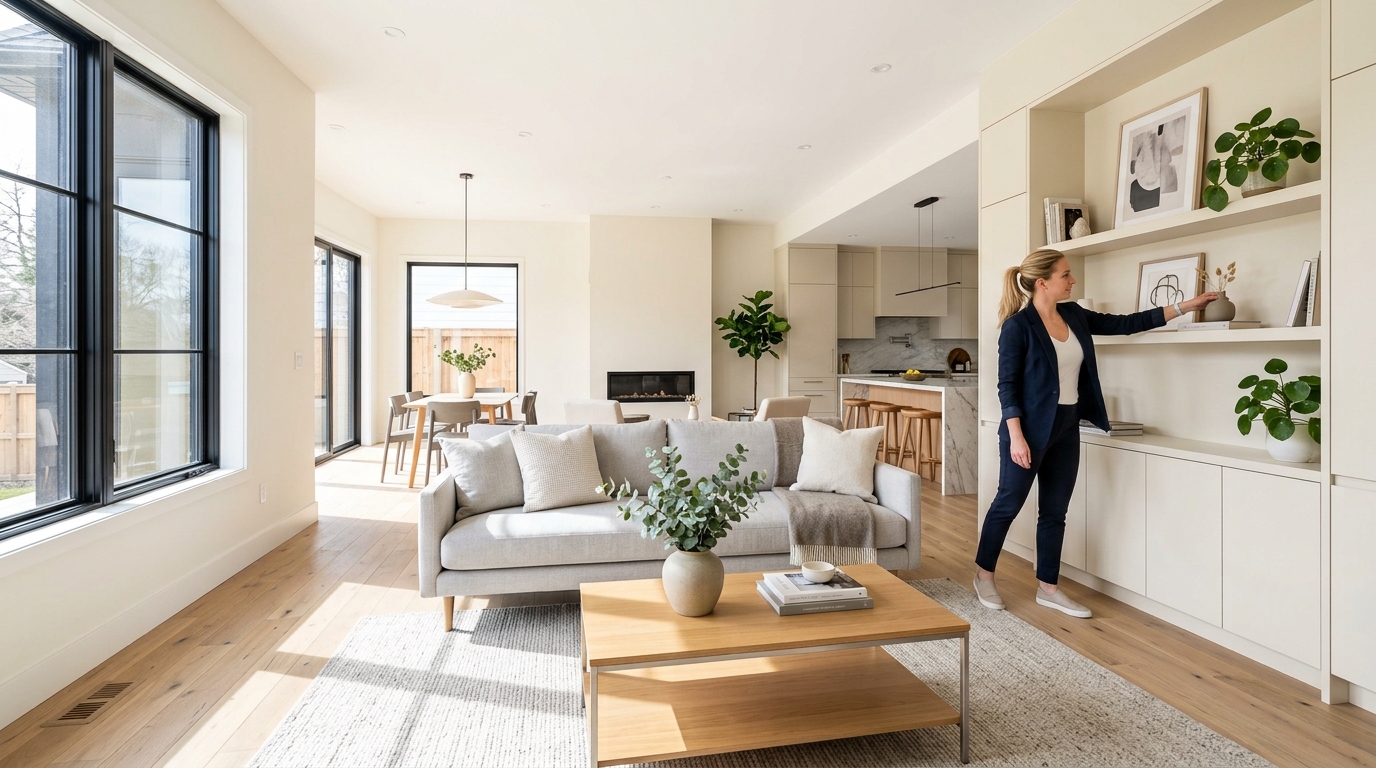
Home staging helps buyers see a property’s space, function, and potential. For Windsor-Essex sellers, start by removing distractions, arranging furniture to show how rooms are used, and fixing any visible maintenance issues before adding decorations. Personal collections, oversized furniture, and cluttered entrances can draw attention away from your home’s best features. If your property is empty, focus on staging the main living area, dining room, primary bedroom, or any rooms with unusual layouts. Getting advice from a REALTOR® can help you set priorities before taking photos or showing your home. The main points are to keep things simple, make each room’s purpose clear, and create a welcoming first impression. Follow our easy home staging tips to make your house look better when selling.
Key Takeaways
- Clear clutter and keep walking paths open.
- Use furniture that fits the room.
- Prioritize cleaning, lighting, and minor repairs.
- Check curb appeal before photos and showings.
Getting a home ready to sell is not the same as decorating it for daily living. Decorating shows off your personality, but staging helps buyers see the home’s space, function, and potential. The best home staging tips create a clean, welcoming look that appeals to many buyers without making the home feel empty or bland. This change can be tough for first-time sellers. A room that feels comfortable to you might look crowded or confusing in photos, while an empty home can make it hard for buyers to judge the space. Knowing common mistakes can help you make better choices before listing.
What Is the Difference Between Home Staging and Decorating?
Decorating asks, “What do I enjoy living with?” Staging asks, “What will help buyers see themselves living here?”
You do not have to remove all character from your home. Instead, keep walkways clear, arrange furniture thoughtfully, and use simple styling to highlight your home’s best features.
This difference matters even more in Canada, where buyers often see a home for the first time through online photos or videos. Whether it is a house in Windsor-Essex or a condo in another Canadian city, the first showing usually happens on a phone screen. If the space looks confusing, buyers might skip your home before ever visiting.
What Home Staging Mistakes Should I Avoid?
Three common mistakes are staging based on personal taste, using furniture or layouts that make a room’s purpose unclear, and ignoring the home’s first impression. Any of these can distract buyers from noticing your home’s best features.
Staging for Personal Taste Instead of Buyer Appeal
A room filled with personal items might be nice for you, but it can overwhelm buyers. Large collections, crowded shelves, lots of wall decorations, bold colors, and many family photos can take attention away from the room itself.
You do not need to take away every sign of life. Instead, arrange the room so buyers notice its size, light, and main features first. Keep a few matching accessories, clear off surfaces, and cut down on clutter. If a room has several bold decorations, pick one as the main focus and let the rest support it. Storage is important too. Buyers often open closets, cabinets, and pantries, so pack away out-of-season clothes and items you do not use daily rather than just hiding clutter. One of the best tips is to look at each room as if you were a buyer, not the owner.
Creating Confusing or Poorly Scaled Layouts
Furniture should help buyers see how a room is used. Big pieces, blocked walkways, or too many small items can make a space feel crowded. Make sure the living room has a clear spot for conversation, the dining area is easy to find, and spare rooms have a clear purpose.
Remove furniture that obstructs movement or blocks windows, doors, or special features. Arrange what is left to show how the room works, but do not feel you need to fill every wall.
Empty homes have a different challenge. While an empty room looks tidy, buyers may struggle to judge its size. They might wonder if a bed fits, where a sofa should go, or what an odd space is for. Staging just a few key areas can help answer these questions.
You do not need to furnish every empty room fully. Focus on the main living area, dining room, primary bedroom, and any rooms with unusual layouts. Even a few well-sized pieces can help buyers picture how to use the space. These tips work for both lived-in and empty homes.
Ignoring the Property’s First Impression
Sellers often focus on cushions and art but forget the details buyers see first. Marks on walls, poor lighting, dust, old entrance mats, and small repairs left undone can make the home seem poorly cared for. Before adding decorations, clean the home well and fix anything that needs attention. Change any burnt-out bulbs, tighten loose handles, touch up marks, and try to use the same type of lighting throughout.
Give the outside of your home the same care. Buyers start judging before they even walk in, and the front of your house is often the first photo they see. In Canada, seasonal upkeep matters—cut the grass, clear leaves, shovel snow, salt walkways, or remove damaged planters as needed. A clean entrance, an easy-to-see house number, neat garden beds, and a well-kept front door can make your home feel cared for without spending much on renovations.
Why Does DIY Sometimes Go Wrong?
DIY staging can be hard because you are used to your own home. After living with a crowded room or awkward furniture, it might seem normal to you. It is also tough to let go of personal items or admit that a favourite design might distract buyers.
Copying ideas from staged homes online can cause problems if you do not think about your home’s size or layout. A style that works in a large model home might be too much for a smaller house, and trendy decorations cannot fix poor lighting or neglected repairs.
The best home staging tips prioritize changes that improve a buyer’s understanding of the home. Cleaning, editing possessions, correcting furniture placement, and completing minor repairs will usually matter more than purchasing numerous new accessories.
A local REALTOR® can offer a more objective perspective on how buyers are likely to experience the property. While not every brokerage offers professional staging services, an experienced REALTOR® can help identify presentation priorities and advise whether hiring a professional stager is worthwhile. Consider professional staging if the home has a unique layout or unusual spaces, if the property will be vacant during showings, if previous listing photos failed to attract interest, or if your timeline is tight and you want the strongest first impression. A stager can also be valuable when selling in a tough market or if feedback from early showings points to presentation issues.
How Can I Maximize My Curb Appeal Before Selling?
Begin with maintenance rather than decoration. Clean the driveway and walkway, trim overgrown landscaping, remove waste bins from view, and confirm that exterior lights work. Next, inspect the entrance for peeling paint, damaged hardware, cobwebs, or seasonal debris.
Keep things simple. A healthy plant, clean doormat, and a little seasonal greenery can make your entrance inviting, but too many decorations can be distracting. The weather in Canada can change quickly, so check the outside of your home right before photos and each showing. In Windsor-Essex and other places with changing seasons, wind, rain, leaves, snow, and road salt can change how your home looks in just a few hours. A quick last check helps keep your home looking like it does in the listing photos.
Home Staging Checklist Before Photography and Showings
Use these practical home staging tips before photography or the first showing:
- Remove excess furniture and create clear walking paths.
- Give every important room an obvious purpose.
- Reduce personal photographs, collections, and highly specific décor.
- Clear most items from counters, tables, and bathroom vanities.
- Organize visible storage areas without overfilling them.
- Clean floors, windows, appliances, and glossy surfaces.
- Replace burnt-out bulbs and improve dark areas.
- Complete noticeable minor repairs and paint touch-ups.
- Prepare the entrance, lawn, and seasonal exterior areas.
- Ask someone unfamiliar with the home to walk through it objectively.
Ultimately, successful staging removes distractions and helps buyers understand the property. A well-staged home can make a strong first impression, which often helps properties sell faster and may increase the final sale price. Thoughtful presentation can support stronger photography, more comfortable showings, and a clearer connection with potential buyers. Use the final impression to reinforce the home’s strongest features. Follow these home staging tips to present your home with confidence and leave buyers with a positive final impression.
Frequently Asked Questions
What is the difference between home staging and decorating?
Decorating reflects your personal preferences and how you live. Home staging helps buyers understand a property’s layout, space, and potential by reducing distractions and highlighting its features.
What should I do first when staging my home?
Start with cleaning, decluttering, and visible maintenance. Clear walking paths, replace burnt-out bulbs, and complete minor repairs before choosing accessories or adding decorative touches.
Should I remove all personal items before showing my home?
You do not need to remove every sign of personality. A great home staging tip is to reduce family photographs, collections, and highly specific décor so buyers can focus on the room’s size, light, and features. Keep a few coordinated accessories for a welcoming appearance.
Which rooms should I prioritize when staging a vacant home?
Focus on the main living area, dining space, primary bedroom, and rooms with unconventional layouts. Properly scaled furniture can help buyers understand how these spaces function without furnishing every room. Use these spaces to make the home feel clear and easy to understand.
Can I stage my home myself, or should I hire a professional?
You can handle many preparation tasks yourself, including cleaning, decluttering, and rearranging furniture. A REALTOR® can provide an outside perspective and help you assess whether a professional stager would be useful for your property.
How can I improve curb appeal without a major renovation?
Clean the entrance and walkways, trim overgrown landscaping, remove seasonal debris, and check exterior lighting. A clean doormat, tidy garden beds, and a well-maintained front door can create a welcoming first impression.
Are you getting ready to sell?
Get in touch with a Royal LePage Binder REALTOR® for honest advice on which improvements will make the biggest difference for your home. You can also look at current listings to see how other homes are being shown to buyers today.
Contact one of our Fully-licensed REALTORS® today!
Are you seeking an experienced REALTOR® who specializes in the Windsor and Essex County real estate markets? At Royal LePage Binder Real Estate, our agents are focused on helping you unlock your future.